Loading. Please wait...
Journal · 5 min read
Ink and Ashes
What writing owes to fire
To write is to burn something. A certainty, a memory, a version of oneself one thought was final. Ink does not flow: it consumes. And what remains afterwards, that black residue on the page, is ash. Organised ash, certainly. But ash nonetheless.
I have never believed in writing as construction. One does not build a book. One burns it. One takes everything one knows, everything one thinks one knows, and sets it on fire. What survives the flames is the text.
Every sentence contains an element of destruction. To choose a word is to renounce a thousand others. To finish a paragraph is to accept that this thought will never again be expressed another way. Writing is an unending act of mourning, disguised as creation.
Ashes have this beauty: they do not lie. They are what remains when the superfluous has burned. No ornament, no pretence. Just the trace of what was. And in that trace, sometimes, a truth that only fire could reveal.
I think of all the manuscripts I have destroyed. Not out of anger, nor spite. Out of necessity. Certain texts must die so that others may be born. It is the secret law of writing: it feeds on its own ruins.
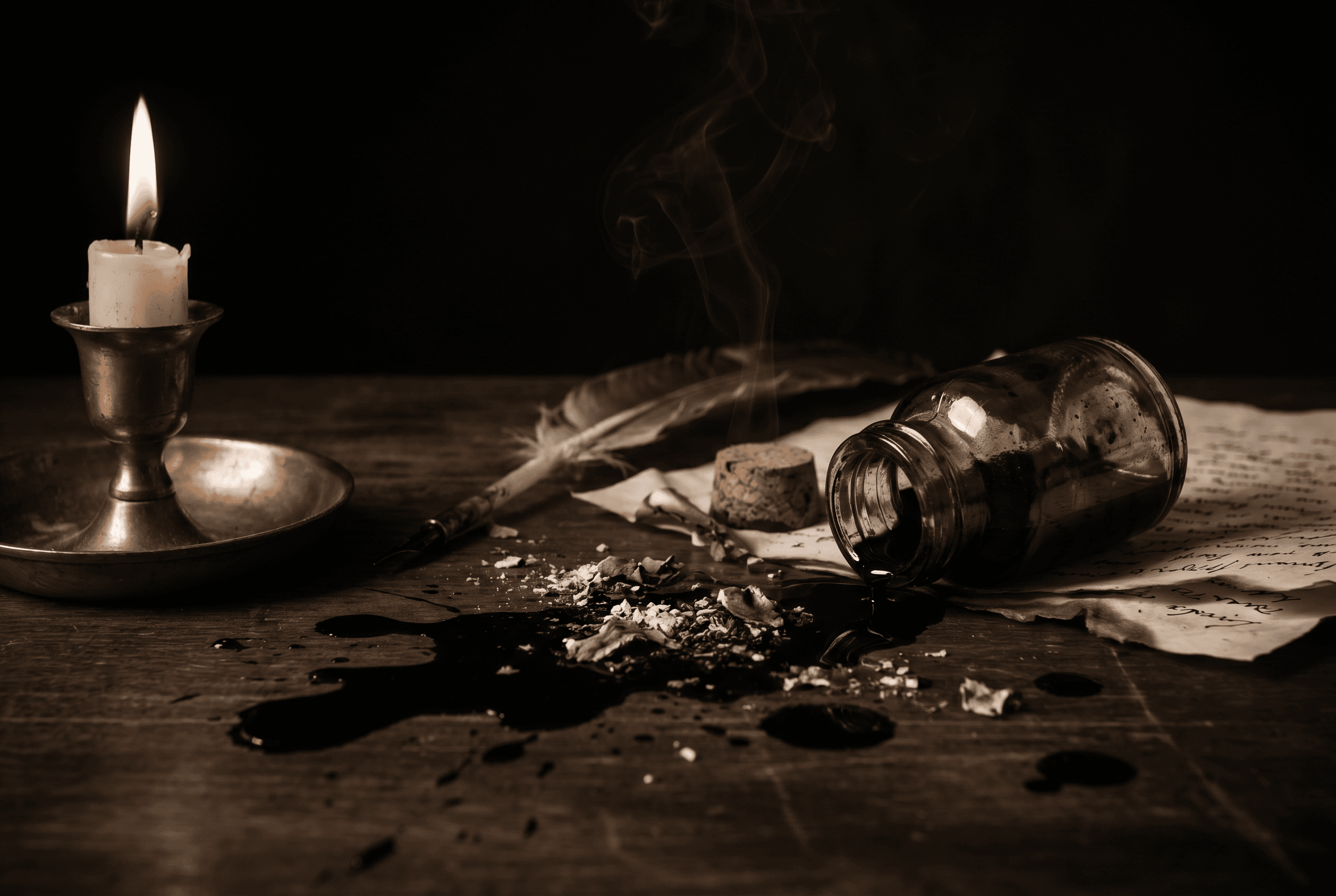
Ink and ashes belong to the same family. One is the promise, the other is the memory. Between them, there is fire. And fire is the act of writing.